Speedbots — AI Automation Company & Business Automation Solutions Provider
Home
Solutions
Products
Success Stories Blogs Contact
WhatsApp Get a Demo

Why AI Automation Is Becoming Essential for Businesses in Malaysia, Singapore, and UAE.

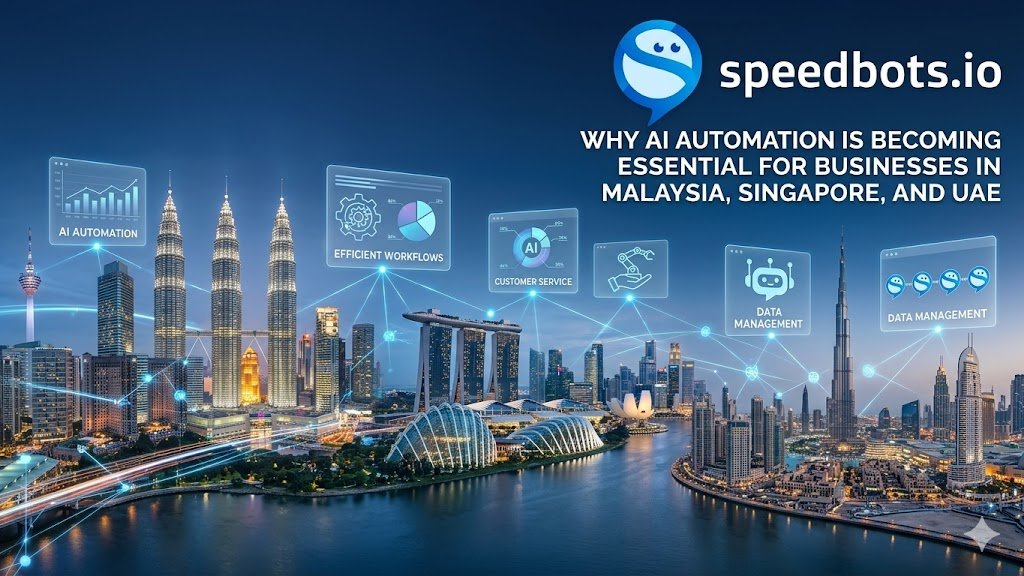
Why AI Automation Is Becoming Essential for Businesses in Malaysia, Singapore, and UAE.

Businesses across Malaysia, Singapore, and the UAE are experiencing rapid digital transformation. As customer expectations evolve and competition intensifies, organizations are under increasing pressure to improve efficiency, reduce operational costs, and deliver exceptional customer experiences. In this environment, AI automation has emerged as a powerful solution that helps businesses streamline operations, make smarter decisions, and scale sustainably.

From customer support and sales processes to internal workflows and data management, AI automation is changing the way companies operate. Businesses that embrace automation are finding new opportunities for growth, while those that delay adoption risk falling behind in an increasingly technology-driven market. As a leading provider of intelligent automation solutions, SpeedBots helps businesses simplify complex processes, improve productivity, and accelerate digital transformation across various industries.

This article explores why AI automation is becoming essential for businesses in Malaysia, Singapore, and the UAE and how organizations can leverage it to gain a competitive advantage.

The Growing Demand for Business Automation

Modern businesses generate enormous amounts of data and handle numerous repetitive tasks daily. Manual processes often lead to inefficiencies, delays, and human errors that can impact productivity and customer satisfaction.

AI automation addresses these challenges by enabling businesses to automate repetitive tasks, process information quickly, and support decision-making with intelligent insights. As a result, employees can focus on higher-value activities such as innovation, customer relationships, and strategic planning.

Organizations across industries are recognizing that automation is no longer just an option it is becoming a necessity for maintaining operational efficiency and competitiveness. With innovative solutions from SpeedBots, businesses can automate critical workflows, enhance operational efficiency, and create scalable systems that support long-term growth in today’s fast-paced digital economy. 

Why Businesses in Malaysia Are Adopting AI Automation

Malaysia’s digital economy continues to grow rapidly, encouraging businesses to invest in modern technologies that improve productivity and customer engagement. As the demand for digital transformation increases, AI Automation in Malaysia is helping organizations streamline operations, enhance customer experiences, and achieve sustainable business growth.

Improved Operational Efficiency

Businesses in Malaysia are increasingly using AI automation to streamline workflows, reduce manual effort, and accelerate routine business processes. Automated systems can handle tasks around the clock, reducing delays and improving overall efficiency while enabling teams to focus on strategic initiatives.

Better Customer Service

Customers expect quick responses and seamless interactions. AI-powered automation helps businesses provide instant support, answer common inquiries, and improve customer satisfaction without increasing staffing costs. This allows organizations to maintain high service standards while managing growing customer demands.

Cost Reduction

Many Malaysian businesses are looking for ways to optimize resources and reduce operational expenses. Automation enables organizations to accomplish more with fewer manual processes, resulting in significant cost savings over time and improved operational performance.

Enhanced Decision-Making

AI automation can analyze large volumes of business data and provide valuable insights. This helps leaders make informed decisions based on real-time information rather than relying solely on assumptions. As adoption continues to grow, AI Automation in Malaysia is becoming a key driver of smarter business strategies and long-term competitiveness.

Why Singapore Is Leading the AI Automation Movement

Singapore has established itself as a global innovation hub with a strong focus on digital transformation and technological advancement. As businesses continue to embrace AI Automation in Singapore, organizations are discovering new ways to improve efficiency, reduce operational costs, and stay competitive in a rapidly evolving market.

High Demand for Productivity

As businesses face increasing labor costs and growing customer expectations, automation has become a practical solution for maintaining productivity and efficiency. AI Automation in Singapore helps companies streamline repetitive tasks, optimize workflows, and enable employees to focus on higher-value activities that drive business growth.

Faster Business Growth

AI automation allows companies to scale operations without proportionally increasing workforce requirements. This enables businesses to expand more efficiently while maintaining consistent service quality and operational consistency.

Improved Customer Experiences

Singaporean consumers expect personalized and responsive interactions. AI automation helps businesses deliver tailored experiences by analyzing customer behavior, anticipating customer needs, and providing relevant recommendations that improve engagement and satisfaction.

Competitive Advantage

Businesses in Singapore operate in highly competitive markets. Organizations that adopt AI automation can gain a significant advantage by responding faster to customer needs, improving operational efficiency, and making data-driven decisions that support long-term growth.


Why UAE Businesses Are Investing in AI Automation

The UAE is rapidly becoming one of the most technology-driven economies in the world. Businesses across sectors are embracing AI automation to support innovation and long-term growth. As organizations continue to invest in digital transformation, AI Automation in UAE is helping businesses improve efficiency, enhance customer experiences, and gain a competitive edge in both regional and global markets.

Accelerating Digital Transformation

Companies in the UAE are actively modernizing their operations to stay competitive in a global market. AI automation plays a critical role in this transformation by improving efficiency, reducing manual processes, and enabling smarter workflows across departments.

Meeting Rising Customer Expectations

Customers increasingly expect immediate responses and personalized experiences. AI automation helps businesses deliver these expectations while maintaining operational efficiency, ensuring consistent service quality and stronger customer engagement.

Supporting Business Expansion

Many UAE-based businesses serve regional and international markets. Automation allows organizations to manage larger customer volumes and business processes without sacrificing quality, making it easier to scale operations and support growth objectives.

Data-Driven Business Strategies

Organizations are leveraging automation to analyze business data, identify trends, and uncover opportunities for growth. This helps leaders make strategic decisions with greater confidence and respond quickly to changing market conditions. As adoption continues to increase, AI Automation in UAE is becoming an essential component of modern business success and long-term sustainability.

Key Benefits of AI Automation Across All Three Markets

While each market has unique characteristics, businesses in Malaysia, Singapore, and the UAE are experiencing similar benefits from AI automation. Companies working with automation specialists such as SpeedBots are leveraging intelligent solutions to improve efficiency, streamline workflows, and accelerate growth.

Increased Productivity

Automation eliminates repetitive tasks and reduces manual workloads. Employees can focus on strategic initiatives that contribute directly to business growth and innovation.

Improved Accuracy

Manual processes often result in errors that can impact operations and customer experiences. Automated systems perform tasks consistently and accurately, reducing costly mistakes and improving reliability.

Enhanced Customer Engagement

AI automation enables businesses to respond quickly to customer inquiries, provide personalized experiences, and maintain high service standards across multiple channels.

Scalability

As businesses grow, operational complexity increases. Automation allows organizations to scale processes efficiently without significantly increasing resources, making expansion more manageable.

Better Resource Utilization

Companies can allocate time, talent, and resources more effectively by automating routine activities and focusing on value-driven work.

Faster Response Times

Customers appreciate speed and convenience. Automated systems help businesses deliver faster responses, improving customer satisfaction and retention.

Common Areas Where Businesses Use AI Automation

Organizations across industries are implementing automation in various functions to improve performance and efficiency. Solutions developed by SpeedBots can help businesses automate critical processes while maintaining operational flexibility.

Customer Support

Businesses use AI automation to handle frequently asked questions, provide instant responses, and support customers around the clock.

Lead Management

Automation helps businesses capture, qualify, and manage leads more effectively, improving sales efficiency and conversion rates.

Marketing Operations

Companies automate campaign management, customer segmentation, and engagement workflows to improve marketing performance and customer targeting.

Data Processing

AI automation can process large volumes of information quickly, helping businesses extract valuable insights and improve decision-making.

Administrative Tasks

Routine tasks such as scheduling, reporting, document management, and workflow approvals can be automated to reduce administrative burdens.

Internal Communication

Automation improves collaboration by ensuring information is shared efficiently across departments and teams.

Challenges Businesses Can Overcome with AI Automation

Many organizations face challenges that hinder growth and efficiency. AI automation provides solutions to several common business problems.

Labor Shortages

Businesses often struggle to find and retain skilled talent. Automation helps fill operational gaps by handling repetitive tasks efficiently.

Rising Operational Costs

Increasing expenses can impact profitability. Automation reduces the need for manual intervention, helping businesses control costs and optimize resources.

Inconsistent Customer Service

Maintaining consistent service quality can be difficult as businesses grow. Automated systems ensure customers receive reliable and timely support.

Information Overload

Organizations generate vast amounts of data daily. AI automation helps process and analyze information, making it easier to identify actionable insights and business opportunities.

The Future of AI Automation in Malaysia, Singapore, and UAE

The adoption of AI automation is expected to accelerate significantly in the coming years. Businesses that invest early will be better positioned to capitalize on emerging opportunities and market trends.

As technologies continue to evolve, automation will become increasingly sophisticated, enabling organizations to deliver more personalized customer experiences, improve operational efficiency, and make smarter decisions. Industry leaders such as SpeedBots are helping businesses navigate this transformation by implementing scalable automation strategies tailored to modern business needs.

Companies that view AI automation as a strategic investment rather than a short-term solution will likely achieve stronger growth, higher productivity, and greater resilience in an ever-changing business landscape.

Conclusion

AI automation is no longer a futuristic concept-it is a business necessity. Organizations across Malaysia, Singapore, and the UAE are leveraging automation to improve efficiency, reduce costs, enhance customer experiences, and support long-term growth.

As competition intensifies and customer expectations continue to rise, businesses that embrace AI automation will be better equipped to adapt, innovate, and thrive in the digital economy. With the support of experienced automation partners like SpeedBots, companies can accelerate their digital transformation journey and unlock new opportunities for sustainable growth.

The question is no longer whether businesses should adopt AI automation, but how quickly they can implement it to stay ahead of the competition and unlock new opportunities for success.

FAQ Section

1. How long does it take to implement AI Automation in a business?

The implementation timeline depends on the complexity of business processes and automation requirements. Simple workflows can often be automated within a few weeks, while larger enterprise solutions may require several months for deployment and optimization.

2. Is AI Automation suitable for small and medium-sized businesses (SMEs)?

Yes. AI Automation helps SMEs improve productivity, reduce manual workloads, enhance customer service, and scale operations efficiently without significantly increasing operational costs.

3. What is the return on investment (ROI) of AI Automation?

Businesses typically see ROI through reduced operational expenses, increased productivity, faster response times, improved customer satisfaction, and better resource allocation. The exact return depends on the processes being automated.

4. Can AI Automation be integrated with existing business systems?

Modern AI Automation solutions can integrate with existing software, databases, communication tools, and operational platforms, allowing businesses to improve efficiency without disrupting current workflows.

5. Is AI Automation secure for handling business data?

Yes. AI Automation solutions are designed with security measures such as data encryption, access controls, monitoring systems, and compliance standards to help protect sensitive business information.

6. How does AI Automation help businesses scale faster?

AI Automation enables businesses to handle higher volumes of customer interactions, operational tasks, and data processing without requiring proportional increases in staffing, making growth more sustainable and cost-effective.

7. What should businesses consider before implementing AI Automation?

Businesses should identify repetitive processes, define clear automation goals, evaluate existing workflows, determine success metrics, and choose solutions that align with their long-term growth and operational objectives.
Related Posts

AI Automation for Small Businesses in Malaysia

2026-08-27

AI Automation for Small Businesses in Malaysia

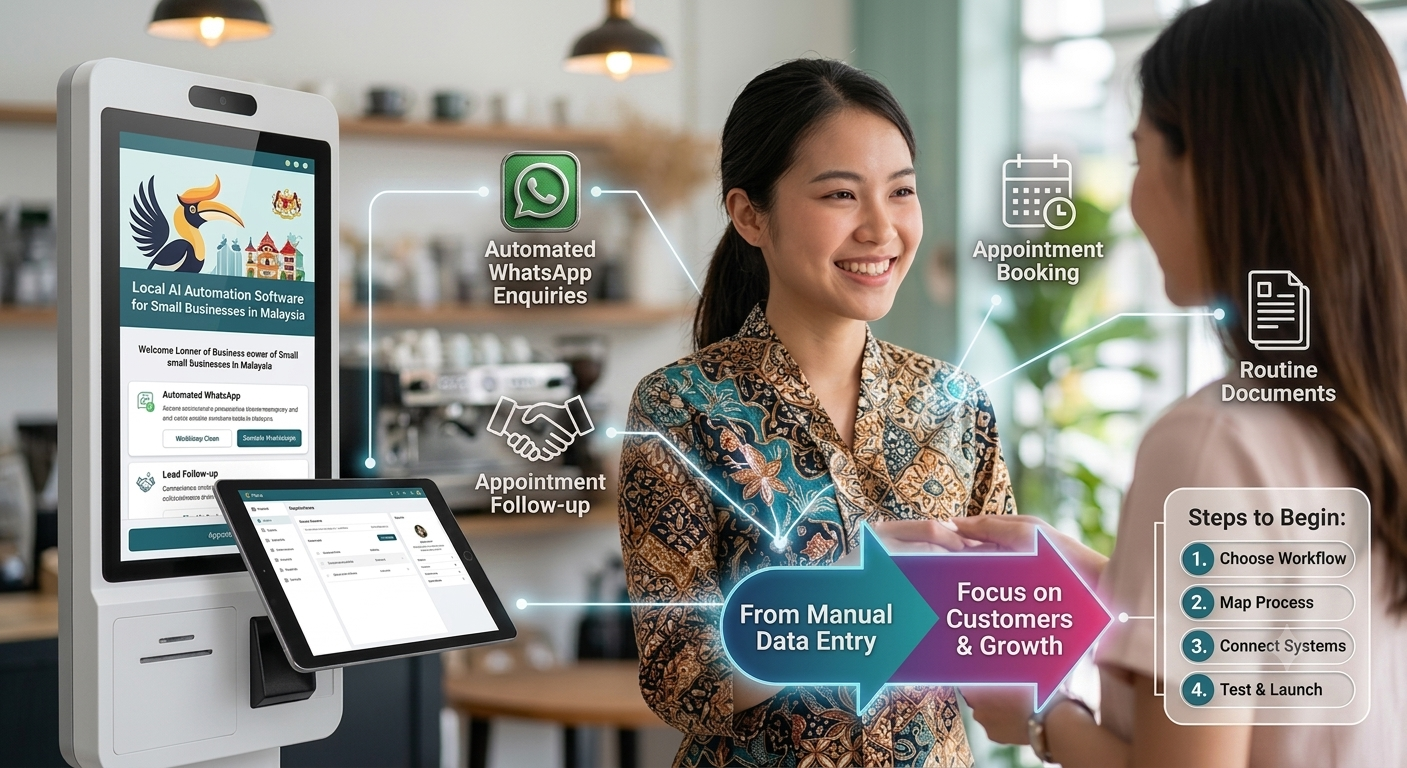
AI automation helps small businesses in Malaysia complete repetitive work faster and respond to customers more consistently. It can support common activities such as answering enquiries, following up with leads, arranging appointments, preparing routine documents and sending reminders. The purpose is not to remove employees from the business. It is to reduce the time they spend on repeated administrative work so they can focus on customers, sales and service quality. Small businesses usually achieve better results by starting with one clear workflow instead of trying to automate every department at once. The Business Problem Small teams often manage customer enquiries, sales follow-ups, appointments and documents through WhatsApp, phone calls, social media and spreadsheets. Each channel may work well on its own, but the workload becomes difficult to manage as enquiry volume increases. A missed message or delayed reply can become a lost sale. Employees may also enter the same customer information several times or depend on memory to complete follow-ups. The result is slower service, inconsistent communication and less time for activities that directly grow the business. Enquiries are missed during busy periods or outside business hours Leads do not receive consistent follow-up Employees repeatedly answer the same questions Quotations, reminders and updates take too long to prepare Practical Examples Customer enquiries A customer asks about pricing, availability or business hours. Automation provides an immediate answer using approved business information and transfers unusual questions to an employee. Lead follow-up A new lead receives an acknowledgement, a few simple qualifying questions and a clear next step. The sales team is notified when personal follow-up is required. Appointment booking Customers can request a suitable appointment time and receive confirmation and reminders without waiting for repeated messages. Quotations and reminders Customer details can be organised to support faster quotation preparation, while routine payment or appointment reminders are sent at the appropriate time. Internal task updates When a customer confirms an order or appointment, the relevant employee receives the information without needing another person to manually forward it. AI automation Malaysia can help businesses connect these routine activities and reduce unnecessary manual coordination. Implementation Steps Choose one high-impact workflow Identify a process that is repeated frequently, causes delays or leads to missed opportunities. Map the current process List what happens from the first customer enquiry to completion, including where employees need to make a decision. Prepare the business information Confirm pricing, services, business rules, frequently asked questions and the situations that must be handed to a person. Build and connect the workflow Set up the customer journey and connect it with the business channels that are required. An experienced AI Automation Company can help businesses identify the right systems and workflows to connect. Test with real situations Ask employees to test normal requests, unclear questions and unusual cases before customers use the workflow. Launch and improve Begin with a controlled launch, review conversations and improve the process based on actual customer behaviour. What Affects the Cost? The price depends on the size and complexity of the business process rather than on the use of AI alone. A focused enquiry or booking workflow usually costs less than a solution covering several departments and systems. Number of customer journeys or departments Channels included, such as website or WhatsApp Volume of enquiries and messages Connection with existing business software Amount of business-specific content and rules Training, support and ongoing improvement requirements Risks and Controls Incorrect or outdated information Use approved business information, assign an owner to review it and update the content whenever prices, policies or services change. Poor customer experience Keep the conversation simple, provide a clear way to reach an employee and test the workflow with real customer questions. Over-automation Do not automate complaints, negotiations or sensitive decisions that require human judgement. Employee resistance Explain what work the automation will reduce and involve employees during testing so the process supports their daily responsibilities. Customer data concerns Collect only the information needed for the process and confirm how access and retention will be managed. Case Example Illustrative example for a small service business. Before A three-person team answered enquiries manually, copied appointment details into a spreadsheet and relied on individual employees to remember follow-ups. Enquiries received during busy periods were sometimes answered late. After Common questions received an immediate response, appointment details were collected in a consistent format and employees were notified when personal assistance was required. The team remained responsible for confirmations, special requests and customer care. How to measure the result Average customer response time Number of missed enquiries Percentage of leads receiving follow-up Employee time spent on repeated questions Number of confirmed appointments or qualified leads Frequently Asked Questions Is AI automation suitable for a very small business? Yes. A small business can begin with one focused activity, such as enquiry handling, appointments or lead follow-up. Will it replace employees? No. It is intended to reduce repetitive work and allow employees to focus on customers and decisions that require judgement. Can it work through WhatsApp? Yes, subject to the available setup and business requirements. How long does implementation take? The timeline depends on the workflow, the information available and whether other business systems must be connected. Can an employee take over the conversation? Yes. A clear human handover should be included whenever personal assistance is required. What should a business automate first? Start with a repeated process that consumes time, causes delays or leads to missed sales opportunities.

How AI Automates Accounting Processes

2026-08-27

How AI Automates Accounting Processes

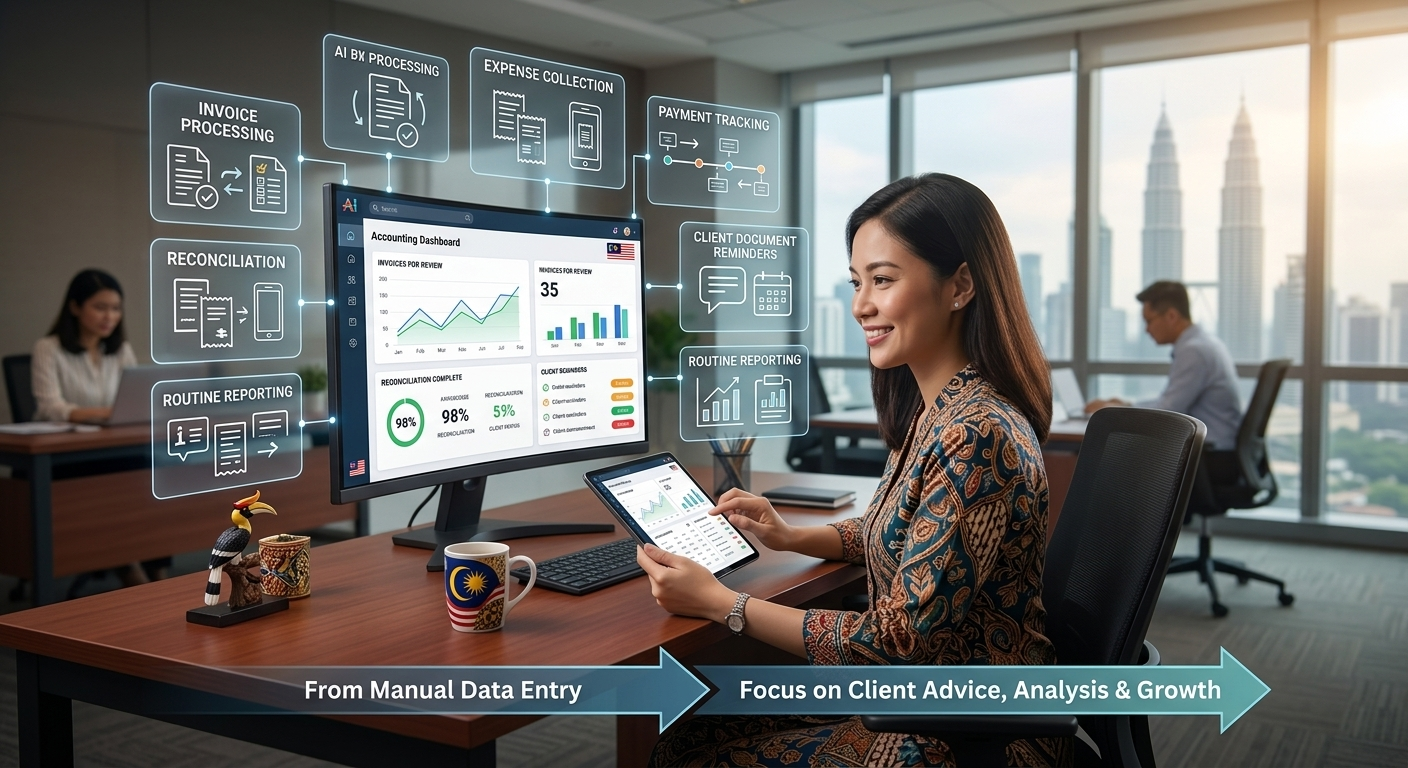
How AI Automates Accounting Processes AI automates accounting processes by helping to collect, organise and compare routine financial information. It can support invoice processing, expense collection, payment tracking, reconciliation, document follow-up and the preparation of standard reports. AI accounting automation can help accounting teams reduce time spent on repeated data preparation while keeping important review points with accountants. Accountants remain responsible for reviewing transactions, resolving exceptions and applying professional judgement. The main value of Finance automation is that it reduces time spent on repeated data preparation, allowing accounting teams to focus on accuracy, analysis and client advice. The Business Problem Accounting information often arrives through email, messaging applications, spreadsheets and paper documents. Employees must collect the documents, enter figures, check payment status and follow up for missing information. When the volume increases, small delays become a larger month-end problem. Missing receipts, inconsistent descriptions and unmatched payments can slow reconciliation and reporting. Accountants then spend more time preparing information than reviewing what the numbers mean. Invoices and receipts arrive through different channels The same information is entered more than once Client documents are incomplete or submitted late Payment records are difficult to match Month-end work depends on last-minute follow-ups Practical Examples Invoice processing Invoice information is organised for review, while incomplete or unclear documents are highlighted for attention. Expense collection Receipts and expense details are collected in a consistent way so the accountant can review the claim instead of preparing it from the beginning. Payment tracking Paid, unpaid and overdue invoices are organised so the appropriate employee can follow up at the right time. Reconciliation Invoice and payment information is compared, with unmatched items presented to the accountant for investigation. Client document reminders Clients receive reminders for missing invoices, receipts or statements, reducing repeated manual follow-up. Routine reporting Organised information supports faster preparation of expense summaries, outstanding payment reports and management accounts. Implementation Steps Select the accounting process Choose an activity with repeated manual work, such as invoice entry, expense collection or reconciliation. Review the current records Identify where documents come from, who reviews them and which information is commonly missing. Define accountant approval points Confirm which items may proceed routinely and which require accountant or manager review. Connect the required information sources Bring together only the files, channels or accounting systems needed for the selected process. Complete user testing Test normal records, duplicates, missing information and unmatched transactions with the accounting team. Go live with monitoring Begin with a limited group of transactions and compare the results with the existing process before expanding. What Affects the Cost? Accounting automation costs vary according to the number of processes, volume of documents and level of connection required with existing software. The scope of Finance automation can also affect the overall complexity depending on the number of workflows and systems involved.  Number and variety of accounting workflows Monthly invoice, receipt or transaction volume Quality and consistency of incoming documents Connections with accounting, banking or sales systems Number of approval levels and exception rules Training, support and reporting requirements Risks and Controls Poor data quality Incomplete or unclear documents should be flagged for review rather than processed without confirmation. Duplicate or incorrect records Include duplicate checks and require review when transaction information is inconsistent. Loss of accountant oversight Keep accountants responsible for exceptions, final reviews and professional decisions. Access to financial information Use appropriate user access and ensure employees only see the information required for their role. Process change Train the team and document the new responsibilities so automation does not create uncertainty during month-end work. Case Example Illustrative example for an accounting firm serving several small-business clients. Before Staff collected invoices and receipts from email and messaging groups, renamed the files and followed up individually for missing documents. Reconciliation work was concentrated near the end of the month. After Client documents were collected through a clearer process, missing information was identified earlier and transaction differences were presented to accountants for review. The accountants remained responsible for adjustments and final reporting. How to measure the result Time spent collecting and renaming documents Number of missing items at month-end Average reconciliation completion time Number of transactions requiring manual investigation Time available for client review and advisory work Frequently Asked Questions Does AI replace accountants? No. It supports data preparation and routine organisation while accountants remain responsible for review and professional judgement. Can it help with reconciliation? Yes. It can organise and compare transaction information, then highlight unmatched items for review. Can accountants approve information before it is finalised? Yes. Human approval should be included wherever the firm or business requires it. Is it suitable for accounting firms with several clients? Yes. A structured process can help firms collect and organise information separately for each client. Accounting firm automation can also support firms in managing repetitive processes across multiple client accounts. What is the best process to automate first? Choose a high-volume activity that creates repeated work, such as invoice processing, expense collection or reconciliation. Accounting automation for accounting firms can be particularly useful when these activities are repeated across multiple clients. How should accuracy be checked? Test the workflow using normal records and exceptions, then compare the result with the existing accounting process before full deployment.

AI Chatbot vs Traditional Chatbot

2026-08-27

AI Chatbot vs Traditional Chatbot

AI Chatbot vs Traditional Chatbot A traditional chatbot follows fixed buttons, keywords and prepared conversation paths. An AI chatbot can understand a wider range of naturally written questions and provide more flexible responses based on approved business information. Traditional chatbots work well for simple, predictable journeys such as choosing a department or checking basic information. AI chatbots are usually more suitable when customers ask varied questions or require explanation. Many businesses use both: fixed options for important actions and AI for open-ended enquiries. Understanding the difference between AI chatbot vs traditional chatbot can help businesses choose the right approach for their customer journey. The Business Problem Customers rarely ask every question using the same wording. A fixed chatbot may work correctly when a customer selects a button but fail when the same customer types a question in an unexpected way. At the same time, not every business needs a highly flexible conversation. Using AI for a simple menu can increase cost and management effort without improving the customer experience. The real challenge is choosing the type of chatbot that fits the customer journey. Customers become stuck in long menus Keyword-based replies misunderstand natural questions Employees still answer the same enquiries repeatedly There is no clear path to a human agent The chatbot does not reflect how customers actually communicate Practical Examples Traditional chatbot: department selection A customer chooses sales, support, billing or appointment booking from a fixed menu. The journey is clear and the available choices rarely change. Traditional chatbot: order status The customer enters an order number and receives a prepared status response or is directed to an employee. AI chatbot: product or service enquiries Customers ask questions in their own words and receive an answer based on approved business information. A Business AI Chatbot can be used to handle these open-ended enquiries while keeping responses within approved business information. AI chatbot: lead qualification The chatbot understands the customer’s requirement, collects relevant details and sends qualified enquiries to the sales team. Combined approach: booking and enquiries Fixed buttons guide customers to booking or order checks, while AI handles general questions that do not fit a single menu option. Implementation Steps Review actual customer questions Study the enquiries received by employees and identify whether they are predictable or varied. Define the customer journeys Separate simple actions, open-ended enquiries and situations that require human support. Choose the chatbot approach Use fixed paths where consistency matters and AI where customers need to communicate naturally. Prepare approved responses and rules Confirm business information, limitations and when a conversation must be transferred to an employee. Test different wording Ask employees to test short questions, unclear questions, spelling variations and unusual requests. Launch and review conversations Monitor where customers stop, ask for help or receive an unsuitable answer, then improve the journey. What Affects the Cost? The cost depends on the complexity of the customer journey, enquiry volume and the amount of ongoing management required. Traditional rule-based flow or AI conversation Number of products, services and customer journeys Monthly message and enquiry volume WhatsApp, website or other channels required Connection with booking, CRM or customer records Content updates, monitoring and ongoing support Risks and Controls Inaccurate AI responses Limit answers to approved information, review conversations and transfer uncertain questions to an employee. Customers becoming trapped Always provide a clear path to human support and avoid unnecessarily long menus. Outdated content Assign responsibility for updating prices, policies, opening hours and service details. Poorly designed handover Send the conversation context to the employee so the customer does not need to repeat everything. Unnecessary complexity Do not use AI where a simple button or form provides a clearer and more reliable customer experience. Case Example Illustrative example for a clinic receiving appointment and service enquiries. Before A fixed chatbot offered several menu options, but customers frequently typed questions instead. Employees had to take over many routine conversations, and customers sometimes selected the wrong menu path. After Fixed options remained for appointment booking and location information, while AI answered common service questions. Sensitive health questions and special requests were transferred to clinic staff. How to measure the result Percentage of enquiries answered without employee intervention Number of customers requesting human assistance Average time to reach the correct department Appointment completion rate Customer drop-off points within the chatbot Frequently Asked Questions Which chatbot is better? Neither is always better. The right option depends on whether the customer journey is fixed or conversational. Is an AI chatbot more expensive? It can be, depending on usage, content and monitoring needs. A traditional chatbot may be more economical for simple processes. Can both types be used together? Yes. Fixed options can support important actions while AI handles natural-language questions. Businesses can also explore AI Chatbot Solutions that combine both approaches based on their requirements. Can customers speak to a person? They should be able to. A clear human handover is an important part of both chatbot types. Does an AI chatbot know everything? No. It should answer only from approved business information and transfer uncertain or sensitive questions. How do we decide what to use? Review real customer questions and choose the simplest approach that provides a clear and helpful experience. The right AI chatbot system should match your customer journeys, business requirements and level of human involvement.

How to Select an AI Automation Vendor

2026-08-27

How to Select an AI Automation Vendor

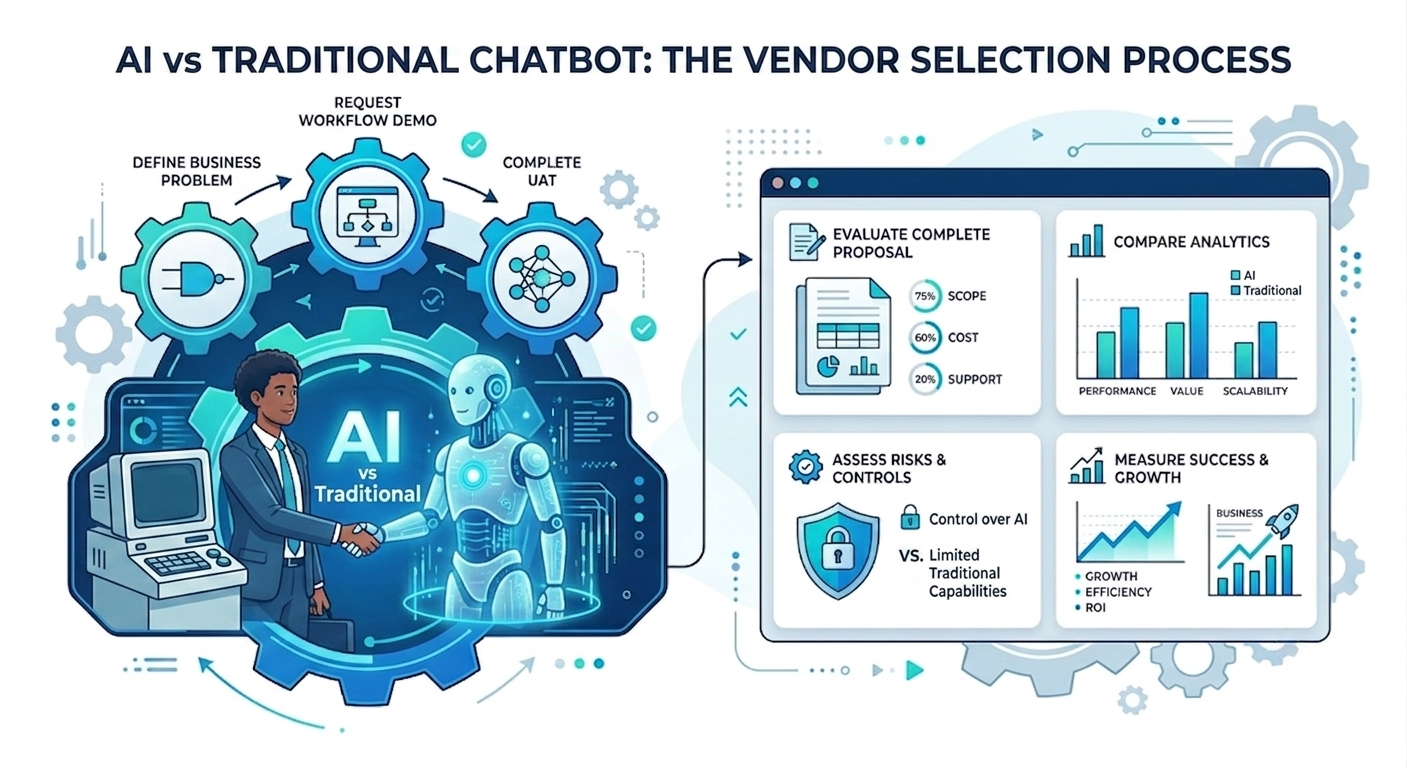
How to Select an AI Automation Vendor Select an AI automation vendor by evaluating how well the vendor understands your business problem, not only by comparing features. The right partner should explain the proposed workflow clearly, identify where employees remain involved and define how success will be measured. Knowing how to select an AI automation vendor can help businesses avoid choosing a solution based only on features or price. Before deciding, review the complete cost, implementation approach, support, data protection and experience with similar processes. A focused pilot is often the safest way to evaluate delivery quality before expanding automation across the business. The Business Problem Many businesses begin by asking which AI tool they should buy. This can lead to a solution being selected before the team has clearly defined the process that needs improvement. A vendor may provide an impressive demonstration that does not reflect the business’s actual customer journey, approvals or exceptions. If responsibilities, costs and expected outcomes are unclear, the business may end up managing another system without reducing its workload. The proposed solution is not connected to a clear business problem The demonstration uses generic examples The total cost is difficult to understand Human responsibilities are not defined Support after launch is unclear The vendor promises results without explaining how they will be measured Practical Examples Accounting reconciliation The vendor should explain how unmatched transactions are reviewed, who approves adjustments and how the business will compare the new process with the current one. CRM and lead follow-up The vendor should show how leads are captured, assigned and followed up, including what happens when information is incomplete. Appointment booking The proposed journey should cover availability, confirmation, rescheduling, reminders and situations that require employee assistance. Customer support ticketing The vendor should explain how requests are categorised, assigned, monitored and escalated without forcing customers through an unnecessarily complicated process. Expense processing The solution should show how missing receipts, unusual expenses and approval limits are handled rather than demonstrating only a perfect submission. Implementation Steps Define the business outcome State what needs to improve, such as response time, reconciliation workload, missed leads or document-processing time. Shortlist suitable vendors Look for relevant workflow experience, clear communication and the ability to work with the systems already used by the business. If you are considering AI Automation Company providers, assess their ability to understand your existing workflows rather than focusing only on the technologies they use. Request a workflow-based demonstration Ask each vendor to demonstrate the real process, including exceptions and human handover. If you require Custom AI Automation in Malaysia , ask the vendor to demonstrate how the proposed workflow can be adapted to your specific business requirements.  Compare the complete proposal Review scope, implementation, training, usage charges, support, responsibilities and future changes. Confirm controls and ownership Clarify access, data handling, approval points, content updates and what happens if the service ends. Complete user acceptance testing Ask actual users to test normal scenarios and failures before approving deployment. Go live with agreed measurements Track the original business outcome and review performance after launch. What Affects the Cost? Vendor quotations may vary because the scope, usage and level of customisation can be very different. Compare the complete commercial picture rather than only the initial implementation fee. Number of workflows, departments and users Connections with existing business systems Message, document or transaction volume Complexity of business rules and approvals Custom reporting or specialised requirements Training, support, maintenance and future changes Risks and Controls Vendor lock-in Confirm data ownership, export options and what happens to the workflow and information if the service ends. Unclear scope Document what is included, what is excluded and how future changes will be quoted. Weak data protection Ask what information is collected, where it is stored, who can access it and how access is managed. Poor adoption Include employees in discovery and testing, and provide training before go-live. A well-planned approach to Business Automation in Malaysia should consider how the solution fits into existing employee responsibilities and business processes.  No exception process Ensure the workflow explains what happens when information is missing, a system is unavailable or an employee must intervene. Unmeasured results Agree on a small number of business measures before implementation so the project can be evaluated objectively. Case Example Illustrative example for a service company selecting a lead-follow-up automation vendor. Before The company compared vendors mainly by chatbot features and subscription price. Demonstrations looked impressive, but none showed how leads would be assigned to sales employees or how follow-up outcomes would be recorded. After The company documented its lead journey, requested demonstrations using the same scenarios and selected a vendor through a limited pilot. The final decision considered employee workload, response time, qualified leads, support and complete cost. How to measure the result Lead response time Percentage of leads receiving follow-up Number of qualified leads reaching the sales team Employee time spent on manual updates Support response time and unresolved issues Total cost compared with the agreed scope Frequently Asked Questions What should we ask an AI automation vendor first? Ask what business problem the proposed solution will solve and how the result will be measured. Should we choose the lowest-priced vendor? Not automatically. Compare the complete scope, usage charges, support, responsibilities and future costs. Is industry experience necessary? It is helpful, but the vendor’s ability to understand and clearly map your actual process is more important. Should we begin with a pilot? A focused pilot can reduce risk and provide evidence of delivery quality before a larger rollout. Who owns the business data? The vendor should clearly explain ownership, access, storage, retention and export arrangements. What support should be included? Confirm training, post-launch assistance, support response expectations and how future improvements will be handled. Also ask whether the AI Solutions Company provides ongoing support after implementation.  How can we compare vendors fairly? Give shortlisted vendors the same business scenarios, requirements and success measures. What is a warning sign? Be cautious if a vendor promises complete replacement of employees, avoids cost questions or recommends a solution without understanding the current process.

AI Agent for Business: Understanding AI Workflows vs AI Agent Solutions

2026-04-19

AI Agent for Business: Understanding AI Workflows vs AI Agent Solutions

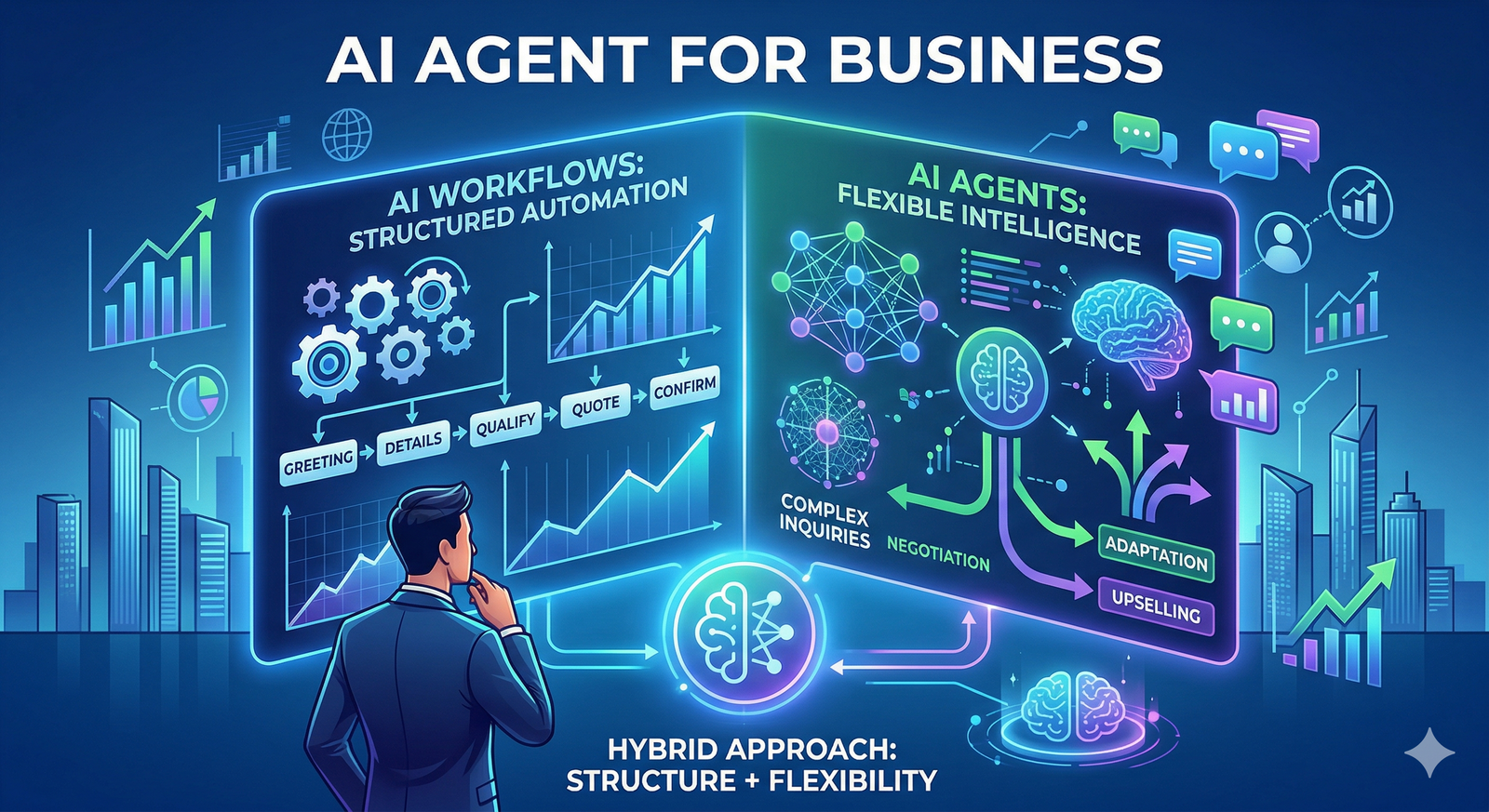
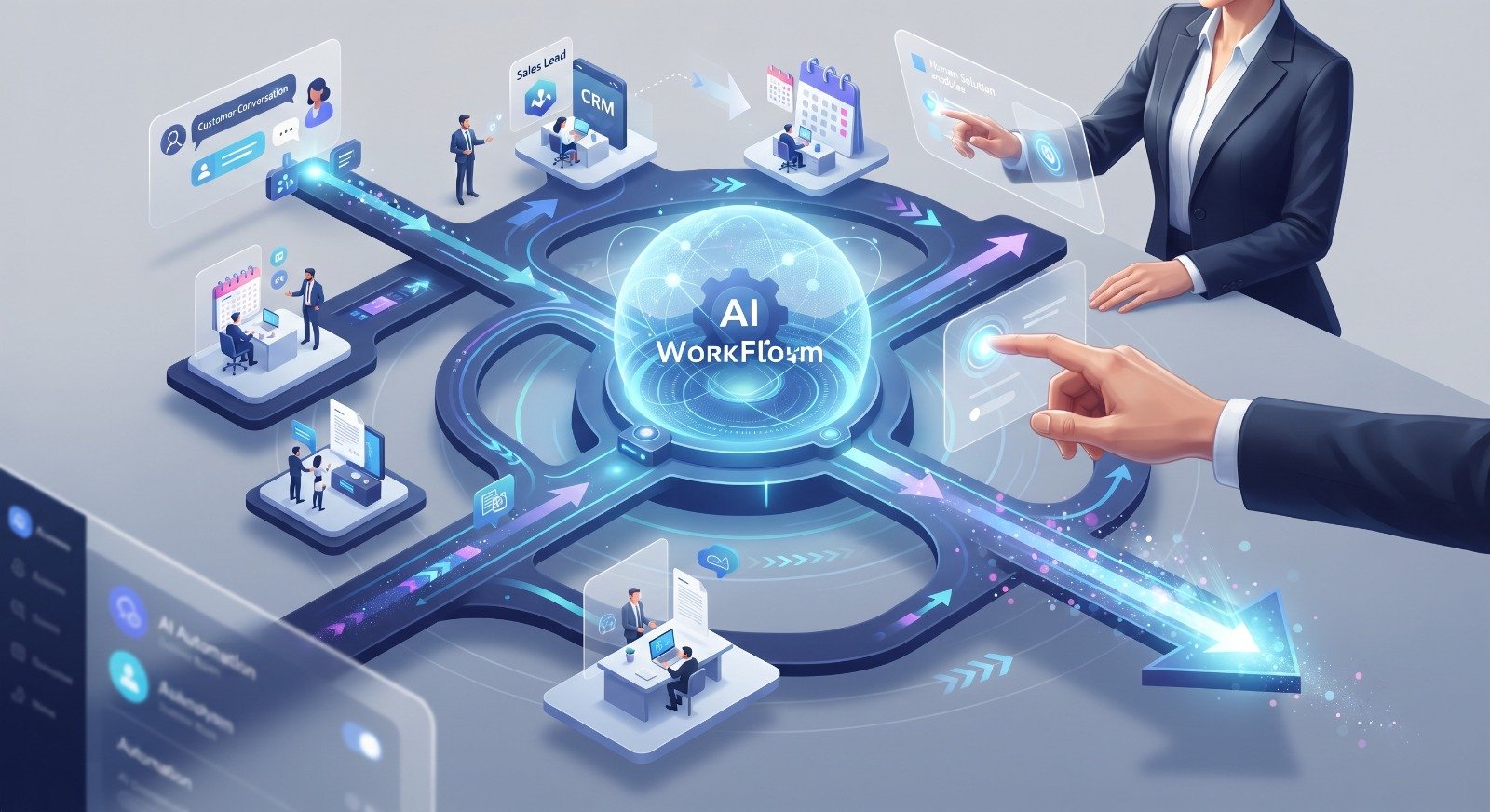
Today, a lot of business owners are hearing about AI and automation, but many are still confused about what they actually need. One of the most important things to understand is the difference between AI workflows and AI agents for business , because this directly affects how your business automation will perform. Let’s start with AI workflows. AI workflows are like having a very disciplined staff member who follows instructions exactly as given. Everything is planned in advance. You decide what happens first, what happens next, and what happens after that. For example, when a customer sends a message, the system replies with a greeting, asks for their details, qualifies the lead, and then sends a quotation or booking link. Every step is already designed, and the system simply follows that path. This works extremely well for businesses because most daily operations are repetitive. Things like answering common questions, sending price lists, booking appointments, confirming payments, or even issuing invoices can all be handled using workflows. You don’t need to think every time - the system just runs. This gives you consistency, saves manpower, and reduces human error. It also makes your operations more organised because everything follows a clear structure. However, this same strength can also become a limitation. Because workflows depend on what you have already planned, they cannot handle situations outside that plan. If a customer asks something unexpected, gives incomplete information, or behaves differently from what you anticipated, the system may not respond properly. In many cases, it either gives a wrong reply or gets stuck, and someone from your team has to step in. This means workflows are very good for structured processes, but not as strong when things become unpredictable. Now let’s look at AI agents. AI agents for business work very differently. Instead of following fixed steps, they behave more like a smart employee who understands the goal and figures out what to do next. You don’t need to tell them every single step. You simply give them an objective, such as handling a customer enquiry, assisting with a purchase, or resolving an issue. From there, AI Agent solutions decide how to respond based on the situation. For example, if a customer asks multiple questions, changes their mind, or gives unclear answers, an AI agent can adjust its responses naturally. It can guide the conversation, clarify information, and even recover if something goes wrong. This makes the interaction feel more human and less robotic. Instead of forcing the customer to follow a system, the system adapts to the customer. This is especially powerful for sales and customer engagement. In real life, customers don’t always follow a straight path. They ask different questions, compare options, delay decisions, or raise objections. An AI agent can handle all of this because it is not limited to a fixed script. It can think, adapt, and respond based on context. So if we simplify the difference, AI workflows follow instructions, while AI agents make decisions. Workflows are structured, stable, and predictable. Agents are flexible, intelligent, and adaptive. Now the most important part - what should a business actually use? The truth is, the best results come when you combine both. Workflows should be used for your core operations. These are the parts of your business that need to be consistent and controlled, such as booking systems, payment confirmations, sending documents, or handling standard enquiries. This ensures everything runs smoothly and nothing is missed. On the other hand, AI agents should be used where human-like thinking is required. This includes handling conversations, answering complex questions, guiding customers through decisions, upselling, and managing situations that cannot be fully predicted in advance. When you combine workflows and agents, your business becomes much more powerful. The workflow handles the structure, while the AI agent adds intelligence on top of it. This means your system is not only automated, but also able to adapt and respond like a real assistant. This is where many businesses are heading today. It is no longer just about automation. It is about building systems that can think, respond, and improve customer experience while still maintaining control over operations. If you are planning to implement an AI Agent in your business , don’t just focus on automating tasks. Focus on understanding where you need structure and where you need flexibility. Once you get that balance right, AI becomes more than just a tool - it becomes a real asset that helps you scale and operate more efficiently.