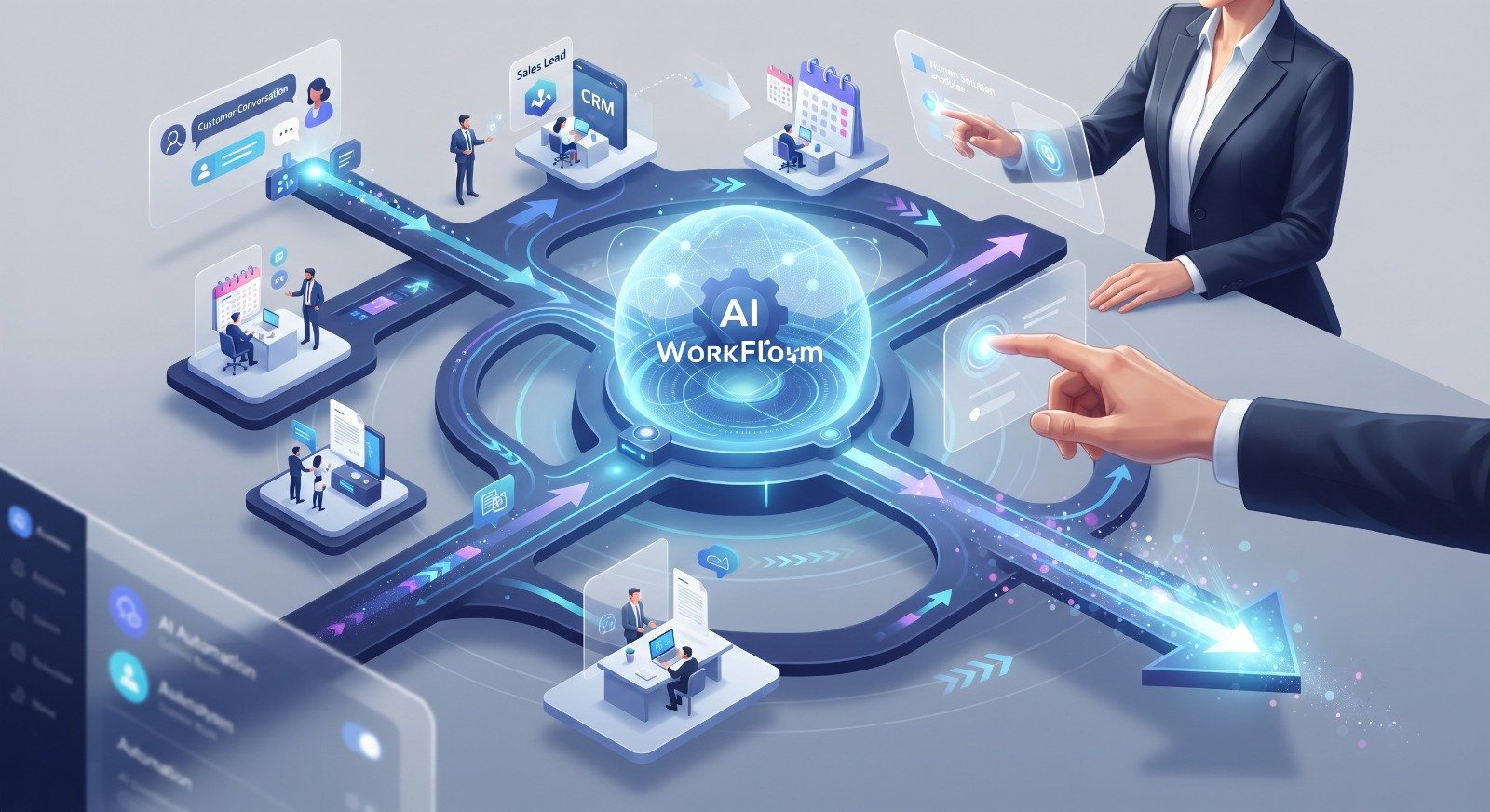
How to Select an AI Automation Vendor
Select an AI automation vendor by evaluating how well the vendor understands your business problem, not only by comparing features. The right partner should explain the proposed workflow clearly, identify where employees remain involved and define how success will be measured. Knowing how to select an AI automation vendor can help businesses avoid choosing a solution based only on features or price.
Before deciding, review the complete cost, implementation approach, support, data protection and experience with similar processes. A focused pilot is often the safest way to evaluate delivery quality before expanding automation across the business.
The Business Problem
Many businesses begin by asking which AI tool they should buy. This can lead to a solution being selected before the team has clearly defined the process that needs improvement.
A vendor may provide an impressive demonstration that does not reflect the business’s actual customer journey, approvals or exceptions. If responsibilities, costs and expected outcomes are unclear, the business may end up managing another system without reducing its workload.
- The proposed solution is not connected to a clear business problem
- The demonstration uses generic examples
- The total cost is difficult to understand
- Human responsibilities are not defined
- Support after launch is unclear
- The vendor promises results without explaining how they will be measured
Practical Examples
Accounting reconciliation
The vendor should explain how unmatched transactions are reviewed, who approves adjustments and how the business will compare the new process with the current one.
CRM and lead follow-up
The vendor should show how leads are captured, assigned and followed up, including what happens when information is incomplete.
Appointment booking
The proposed journey should cover availability, confirmation, rescheduling, reminders and situations that require employee assistance.
Customer support ticketing
The vendor should explain how requests are categorised, assigned, monitored and escalated without forcing customers through an unnecessarily complicated process.
Expense processing
The solution should show how missing receipts, unusual expenses and approval limits are handled rather than demonstrating only a perfect submission.
Implementation Steps
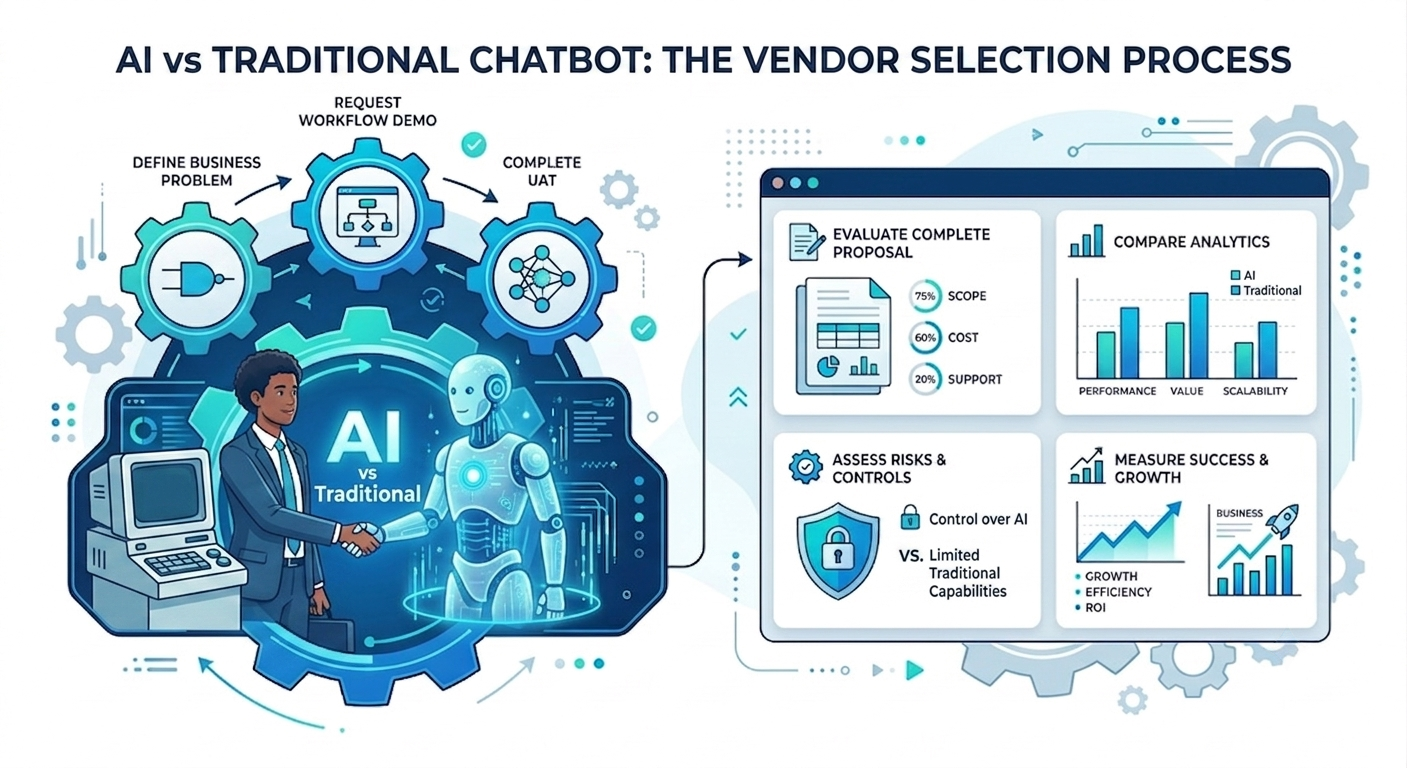
- Define the business outcome
State what needs to improve, such as response time, reconciliation workload, missed leads or document-processing time. - Shortlist suitable vendors
Look for relevant workflow experience, clear communication and the ability to work with the systems already used by the business. If you are considering AI Automation Company providers, assess their ability to understand your existing workflows rather than focusing only on the technologies they use. - Request a workflow-based demonstration
Ask each vendor to demonstrate the real process, including exceptions and human handover. If you require Custom AI Automation in Malaysia, ask the vendor to demonstrate how the proposed workflow can be adapted to your specific business requirements. - Compare the complete proposal
Review scope, implementation, training, usage charges, support, responsibilities and future changes. - Confirm controls and ownership
Clarify access, data handling, approval points, content updates and what happens if the service ends. - Complete user acceptance testing
Ask actual users to test normal scenarios and failures before approving deployment. - Go live with agreed measurements
Track the original business outcome and review performance after launch.
What Affects the Cost?
Vendor quotations may vary because the scope, usage and level of customisation can be very different. Compare the complete commercial picture rather than only the initial implementation fee.
- Number of workflows, departments and users
- Connections with existing business systems
- Message, document or transaction volume
- Complexity of business rules and approvals
- Custom reporting or specialised requirements
- Training, support, maintenance and future changes
Risks and Controls
Vendor lock-in
Confirm data ownership, export options and what happens to the workflow and information if the service ends.
Unclear scope
Document what is included, what is excluded and how future changes will be quoted.
Weak data protection
Ask what information is collected, where it is stored, who can access it and how access is managed.
Poor adoption
Include employees in discovery and testing, and provide training before go-live. A well-planned approach to Business Automation in Malaysia should consider how the solution fits into existing employee responsibilities and business processes.
No exception process
Ensure the workflow explains what happens when information is missing, a system is unavailable or an employee must intervene.
Unmeasured results
Agree on a small number of business measures before implementation so the project can be evaluated objectively.
Case Example
Illustrative example for a service company selecting a lead-follow-up automation vendor.
Before
The company compared vendors mainly by chatbot features and subscription price. Demonstrations looked impressive, but none showed how leads would be assigned to sales employees or how follow-up outcomes would be recorded.
After
The company documented its lead journey, requested demonstrations using the same scenarios and selected a vendor through a limited pilot. The final decision considered employee workload, response time, qualified leads, support and complete cost.
How to measure the result
- Lead response time
- Percentage of leads receiving follow-up
- Number of qualified leads reaching the sales team
- Employee time spent on manual updates
- Support response time and unresolved issues
- Total cost compared with the agreed scope
Frequently Asked Questions
What should we ask an AI automation vendor first?
Ask what business problem the proposed solution will solve and how the result will be measured.
Should we choose the lowest-priced vendor?
Not automatically. Compare the complete scope, usage charges, support, responsibilities and future costs.
Is industry experience necessary?
It is helpful, but the vendor’s ability to understand and clearly map your actual process is more important.
Should we begin with a pilot?
A focused pilot can reduce risk and provide evidence of delivery quality before a larger rollout.
Who owns the business data?
The vendor should clearly explain ownership, access, storage, retention and export arrangements.
What support should be included?
Confirm training, post-launch assistance, support response expectations and how future improvements will be handled. Also ask whether the AI Solutions Company provides ongoing support after implementation.
How can we compare vendors fairly?
Give shortlisted vendors the same business scenarios, requirements and success measures.
What is a warning sign?
Be cautious if a vendor promises complete replacement of employees, avoids cost questions or recommends a solution without understanding the current process.